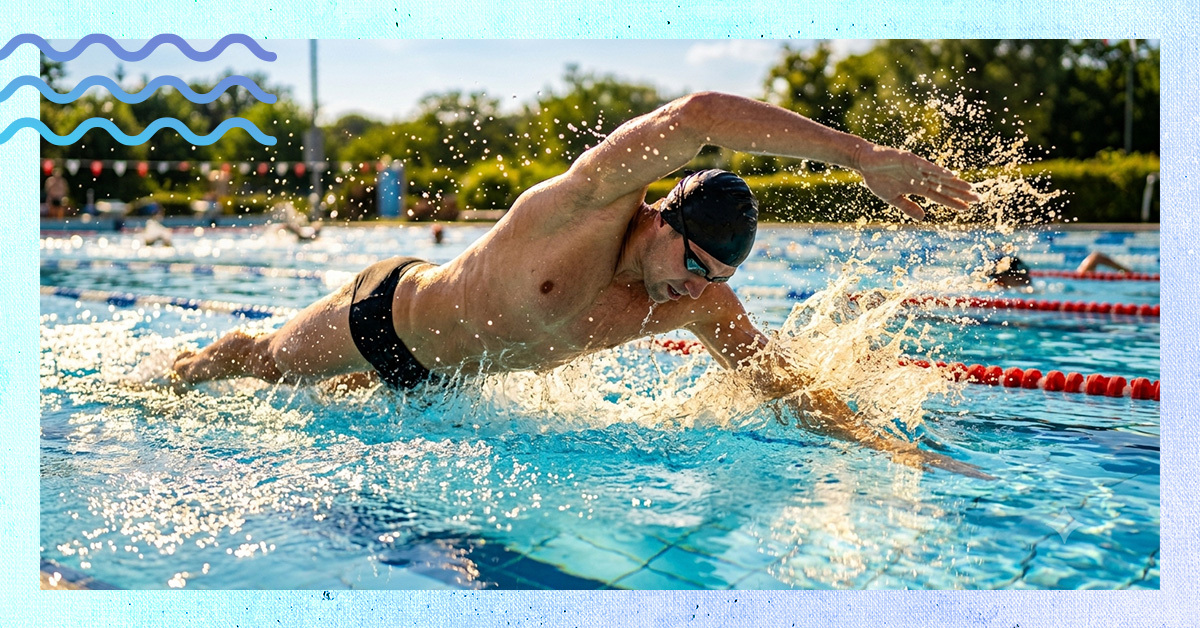
You finish a long set in the pool feeling strong, towel off, and head home, only to notice a dull ache settling into your shoulder by that evening. For a lot of swimmers, this is the summer routine: the water feels wonderful, but the shoulder seems to pay for it a few hours later. If you have started logging more laps now that the weather is warm, you are not imagining the link between your stroke and that nagging soreness. Swimmer’s shoulder is one of the most common overuse complaints in the sport, and the encouraging news is that it usually responds well to the right care.
Your shoulder is the most mobile joint in the body, which is exactly what leaves it exposed to the thousands of repetitive overhead strokes a single workout can demand. Before you assume the worst or give up your favorite summer activity, it helps to understand what is actually happening inside the joint. Hands-on approaches like trigger point therapy can make a real difference for the kind of shoulder pain swimming tends to produce, but the most lasting relief starts with understanding what is driving it.
Table of Contents
Why Your Shoulder Hurts After Swimming (But Feels Fine in the Water)
It is one of the most common questions swimmers ask: why does the shoulder feel fine mid-workout and then start aching once you are out of the pool? Part of the answer is the water itself. Buoyancy supports your body and takes load off the joint, while warm, active muscles mask early signs of irritation. You feel smooth and capable right up until you stop.
What you do not feel in the moment is the steady microtrauma building up in the tendons of the rotator cuff, the group of four muscles that hold the ball of the shoulder snugly in its socket. With each overhead stroke, these tendons glide through a narrow space beneath the bony tip of the shoulder blade. Thousands of repetitions can inflame them, and that low-grade inflammation tends to surface once the supportive warmth of activity fades and the swelling settles in. That delayed ache is your shoulder’s way of reporting the workload after the fact.
What Is Swimmer’s Shoulder?
Swimmer’s shoulder is not a single diagnosis so much as an umbrella term for the shoulder pain that comes from repetitive overhead swimming. In most cases it describes shoulder impingement and the rotator cuff tendinitis that travels with it. Impingement simply means that the soft tissues at the top of the shoulder, mainly the rotator cuff tendons and a small fluid-filled cushion called the bursa, get pinched against bone when you raise your arm overhead.
Clinicians describe impingement as the pinching of the rotator cuff beneath the bony arch during overhead motion, which is essentially the entire job description of a freestyle or butterfly stroke. The result is a familiar pattern: a deep ache in the front or side of the shoulder, a pinch when you reach overhead, and tenderness that lingers after a long set. Catching it early, while it is still irritation rather than damage, is what keeps a minor annoyance from becoming a longer layoff.
Swimmer’s Shoulder vs. a Rotator Cuff Tear
This is the distinction that worries swimmers most, and it is a fair concern. Swimmer’s shoulder is usually an overuse injury: the tendons are inflamed, irritated, and unhappy, but still structurally intact. A rotator cuff tear, by contrast, is actual physical damage to the tendon – either a partial fraying or a complete rupture of the fibers.
The symptoms can overlap, but there are clues. Tendinitis and impingement tend to produce a nagging ache that worsens with activity and eases with rest. A tear more often brings noticeable weakness, such as trouble lifting your arm or holding it out to the side, and sometimes a pop or catching sensation. Because that loss of strength points to structural damage (rather than simple irritation), a hands-on evaluation is the surest way to tell the two apart. The vast majority of swimmer’s shoulder cases are not tears, but persistent weakness is always worth having checked.
Which Strokes Are Hardest on the Shoulder?
Not all strokes load the shoulder equally. Freestyle is the usual culprit, mostly because of sheer volume: it is the stroke most swimmers spend the most time doing, so the repetitive overhead recovery and pull add up fast. Butterfly is arguably more demanding per stroke, but most people simply swim far less of it. Backstroke also keeps the arm cycling overhead, while breaststroke is generally the gentlest on the shoulder.
The freestyle motion itself is where the trouble usually starts, because repetitive overhead movement is one of the leading causes of shoulder impingement. Each time your hand enters the water and pulls, the arm rotates internally and the shoulder blade has to glide smoothly to keep the joint clear. Small flaws in technique, such as crossing the centerline on entry or dropping the elbow during the pull, narrow that space even further and turn ordinary mileage into a recipe for irritation.
The Muscle Imbalances Swimming Creates
Swimming is a wonderfully balanced-looking sport that quietly builds a very unbalanced body. The pulling phase of every stroke hammers the internal rotators, the chest, the lats, and the front of the shoulder, while the muscles that pull the arm back and stabilize the shoulder blade get comparatively little work. Over a season the internal rotators grow stronger than the muscles that brake and stabilize the joint. That mismatch slowly pulls the shoulders forward into a rounded posture that narrows the very space the rotator cuff needs.
Breathing habits add another layer. If you always take a breath on the same side, you rotate and load one shoulder more than the other, which is one reason swimmers often notice their shoulder blades feel uneven and tight after a long session. One side is simply working harder. Learning to breathe bilaterally, and deliberately strengthening the neglected muscles between the shoulder blades, is how you keep that imbalance from becoming pain.
How Spinal Alignment Shapes Your Stroke
It is easy to think of swimming as an arms-and-shoulders sport, but your stroke actually begins in your spine. Efficient freestyle relies on your thoracic spine, the mid-back region, rotating freely so your body can roll from side to side with each stroke. When that rotation is available, the shoulder simply rides along. When the mid-back is stiff, the shoulder is forced to reach and rotate beyond its comfortable range to make up the difference.
The neck plays a role too, especially during breathing, when restricted rotation makes you crank your head and hike a shoulder to grab air. Over time these compensations show up as that lopsided, tight feeling across the shoulder blades. This is also where chiropractic assessment earns its keep, because restoring normal motion to the mid-back and neck can take a surprising amount of strain off the shoulder, letting your stroke mechanics smooth out instead of fighting your own body for every breath.
Could Your Desk Job Be Making It Worse?
Here is the part most swimmers overlook: the eight hours you spend at a desk during the week may be setting your shoulder up to fail before you ever hit the water. Hunching toward a screen rounds the shoulders forward and pushes the head out in front of the body, the exact posture that closes down the space the rotator cuff travels through. Every inch of forward head posture piles more load onto the neck and shoulders, so you arrive at the pool already pre-loaded with the same imbalance your stroke reinforces.
The two stack on top of each other. Five days of desk posture plus several swim sessions of internal-rotation work pull in the same direction, and the shoulder pays the combined bill. The fix is not to stop swimming or quit your job, but to interrupt the pattern: frequent posture breaks, a workstation set at the right height, and a few opening stretches for the chest can quietly undo a lot of the damage between swims.
Should You Keep Swimming Through Shoulder Pain?
The honest answer is: it depends on the pain. A mild, dull ache that fades within a day and does not worsen as you swim is usually safe to work around, especially if you cut your volume, ease off the hardest sets, and pay attention to technique. Swimming through sharp or worsening pain, though, is how a manageable case of tendinitis turns into a stubborn one, or worse, edges toward an actual tear.
A few signals mean it is time to back off and get evaluated rather than push on:
- Pain that lingers for more than a week or returns to the same spot every session.
- Weakness or instability, such as trouble lifting the arm or a feeling that the shoulder might give out.
- Pain at rest or at night that has nothing to do with whether you swam that day.
Trying to tough out those warning signs rarely ends well. Reducing load early and addressing the cause almost always gets you back to full training faster than swimming straight through it.
Can a Chiropractor Treat Swimmer’s Shoulder?
Yes, and for most cases a chiropractor is a sensible first stop rather than a last resort. Swimmer’s shoulder is fundamentally a problem of mechanics and overuse, which is squarely the kind of issue conservative, hands-on care is built to address. A sports chiropractor looks past the sore spot to the whole chain: the tight chest and lats, the weak scapular muscles, the stiff mid-back, and the stroke and desk habits feeding all of it.
Treatment usually blends soft-tissue work to release the overworked muscles, adjustments to restore motion to the mid-back and neck, and targeted exercises to rebuild the muscles that hold the shoulder in good position. Research supports combining manual therapy with exercise for shoulder impingement, and a good practitioner will also know when something looks like more than overuse. If an exam points toward a significant tear or another problem that needs imaging or a surgical opinion, you should expect a referral to an orthopedic specialist. The two approaches are partners, not rivals.
What Helps You Swim Pain-Free
Most swimmers can get back to comfortable laps by working on three fronts at once: strength, mobility, and technique. On the strength side, the goal is to rebuild the muscles that swimming neglects. Especially the external rotators and the muscles between the shoulder blades, so the shoulder sits where it should. On the mobility side, opening up a tight chest and a stiff mid-back gives the joint room to move freely again.
Technique matters just as much. Breathing on both sides, lengthening your reach without crossing the centerline, and keeping a high elbow on the pull all reduce the pinch with every stroke. A focused set of corrective exercises tailored to your particular imbalance is far more effective than generic shoulder routines, because it targets the specific weak links your stroke and your week have created. Pair that with smarter training volume, and most swimmers find the pain steadily loosens its grip.
How Long Does Swimmer’s Shoulder Take to Heal?
Recovery timelines vary, but conservative care tends to work on a predictable arc. A mild, recently developed case caught early often settles down within a few weeks once you reduce load and start addressing the underlying mechanics. A more entrenched case, the kind that has been simmering for a season, more commonly takes roughly six to twelve weeks of consistent treatment and rehab to fully resolve.
The single biggest factor is how early you intervene. The swimmer who eases off and seeks care at the first persistent ache is usually back to full training quickly. The one who powers through for months tends to face a longer road. Either way, healing is rarely about rest alone. It is about correcting the imbalances and habits that caused the problem, so the shoulder does not simply flare again the next time the lap count climbs.
Get Back in the Water Without the Ache
At Total Chiropractic Care & Wellness in Medford, NY, we have spent decades helping our Long Island neighbors stay active in the sports they love. We know that shoulder pain from swimming is rarely just a shoulder problem, so we look at your posture, your mid-back mobility, and the muscle imbalances behind the ache, then build a plan that combines gentle adjustments, soft-tissue therapy, and corrective exercises to get you moving freely again.
If summer shoulder pain is cutting your laps short, schedule your visit with Total Chiropractic Care & Wellness today and let us help you swim strong all season long.
If this was useful, tell Google you want more of it.
Leave a Reply